
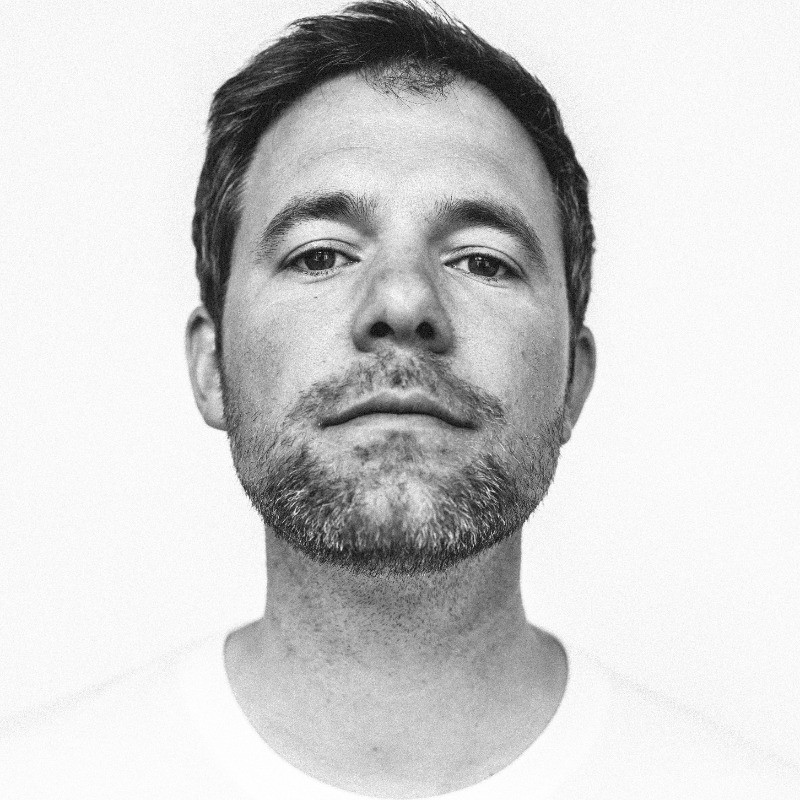
Philipp Moehring is a co-founder at Tiny VC, one of the more active super early stage funds across Europe.
What’s new with Tiny? What are the highlights of this year?
Everything and nothing is new – we’ve got a well oiled machine by now, but there’s always so much exciting stuff happening…
- We see a quality and quantity of new companies that I haven’t witnessed in 18 years in venture (just dating myself…). There was obviously a huge wave during Zirp, but the current crop is much more educated on getting sh*t made and done, and deeper in their understanding of the sectors they tackle. I think both the ’21 experience and AI tools are blowing the doors off what feels possible to founders, and that energy is incredible.
- Internally, we’re building a lot of tools and have brought the whole team along on the AI journey… for example, it’s fun to see the things our GC is whipping up with agents, and how our ops processes get continually better and more automated.
- Seeing the portfolio come back to second maturity after the post-zirp-slump is also exciting. Entrepreneurs that held steady and just put their head down are emerging successfully, and the joy they experience when things start to properly work is great.
Tiny deliberately doesn’t lead rounds or take board seats, and rather plays an index sort of role for European pre-seed/seed stage – what’s the philosophy behind that? What do you lose or gain by staying tiny?
When we’ve started Tiny in 2017, it was with a lot of ground level insights into how some of the best US investors operated as angels or AngelList syndicates, and were highly sought after by both leads and founders when building the cap table.
This goes back to my time at Seedcamp, where filling up rounds beyond the lead was quite difficult – especially if you wanted to have reliably present and insightful folks. We just didn’t see high quality co investors in Europe, even when there were a lot of great leads.
So, with TSIC*, we aim to be a super additive investor, and do things others can’t do. If you remove the need to have a grand thesis or follow the 50 year old playbook, a lot more interesting opportunities open up!
We lose deeper relationships and of course a lot of insight we could gain at the board level, but we feel that the volume is more than making up for it. We’re also trying to be very realistic with entrepreneurs – we are seed investors, not growth people, so it’s probably better to not sit around the table when the companies grow. What we gain is a lot of time and the ability to build a fundamentally different firm, and that is what we’re here for.
What data are you tracking internally – conversion to Series A, survival rate, time to failure – and what surprises you most about that data?
I used to be of the mind that amazing founders will pivot into great ideas, but a lot of our top companies today are simply straight lines from founders’ visions at the start. I suppose you can still find major strategic shifts in most successful companies, but the general direction of travel remained pretty straight for our biggest winners so far (Wayve, Tide, Payhawk, n8n, Synthesia – and a lot more below the $1B mark).
Compared to our original expectations, both survival rates and follow on success are way higher than we expected. However, we are seeing a lot of re-risking of companies with the massive founding rounds and required impact, so those rates will probably not bring as much safety as they once did.
As we are able to look at a pretty large sample of startups from inside, there’s an uncomfortable truth: the most amazing companies look nothing like a playbook. That is a humbling experience, and makes us acutely aware of the one thing we need to get right: backing the right founders who will build the company that fits them and their style.
Which categories are converting fastest from pre-seed to Series A right now?
Robotics and applied AI are the quickest – which makes sense in the grand scheme of things: Robotics are the hot sector that gains steam from general excitement for manufacturing, and AI is the wholesale new volley going for SaaS revenue in enterprise and SME.
Within those, you can see another level of fractal waves – this is always happening as the market discovers new problems collectively. While some trends are technology enabled, a lot of others are answering problems that emerge through new behaviours, or scale in unexpected corners of the tech world. The job is not to predict these, but to be ready when you see a great team focusing on one of these new problems.
Did AI reshape your pipeline – and what kinds of AI businesses still look fundable vs already over-crowded?
I hold that everything that’s overcrowded is too late for us to invest in – we needed to place our bets before this looked obvious. Otherwise, we’d just pay sky high prices in extremely competitive spaces, and could not make money. In terms of fundability, we need to basically take a 2-year forward looking approach and look pretty dumb for a while – that’s the reality of pre seed investing and it’s fun.
Our pipeline is constantly reshaping and quite unpredictable. When we raised this current fund, ChatGPT wasn’t launched yet, and it was not clear at all that transformers and LLMs would be what would underpin the next wave. Not even speaking of the second order effects of data center buildout and the required technologies – that’s a two year old problem at the very best.
We’ve been backing AI and robotics in all their forms since we started investing, so those feel like a good catch up. What’s really interesting at the moment is the reshaping of software and the resulting new realities – if the software suddenly does the job for you, instead of giving you a process, you can also replace any solution without much fuss. It feels like that tsunami of churn is going to be quite interesting…
Where do you see Europe still under-capitalized – what verticals or geographies are you surprised don’t yet have more dedicated funding?
Defense really could do with more money… just kidding – I think we’re doing pretty well across the board. The thing I miss is deep thinking coupled with action – we have SO MANY talking heads who aren’t writing any checks.
In many secondary and tertiary hubs, there’s still a lot of ridiculous behaviour by local seed funds and angels who seem to believe there’s a familiarity discount. Stop it already – if you want to build London, Berlin, and Paris outcomes, you better equip these teams with the right money and let them keep their cap table intact. I can’t believe this is still a topic.
Lastly, and this is of course extremely self serving: We need more LP capital for funds of all sizes and strategies. Great funds from pre seed to growth are struggling with their raises right now (fair: not everyone is good at bringing money back), but I wish we could have more mature conversations that don’t just end up with capital going to bluechip US funds.
Thankfully we’re seeing a development that reminds me of c. 2015 VC land: back then, founders slowly gained an upper hand, and funds started being more founder friendly. That will happen on the funds side, too, as more winners emerge, and LPs start acting more like their more sophisticated US counterparts.
Among your portfolio, which ecosystems in Europe are punching above their weight right now?
I love how every city can take some crown at all times.
Stockholm felt eerily quiet for a while, now it’s got a couple of bangers that make it look like the place for AI.
Munich took the crown from Berlin for now – but let’s see what that is like in a few years when all those high valuations need to be turned into revenue and returns.
Paris is always well capitalised but the exits are not as concentrated – and London is always the biggest and most developed.
I think the new wave of manufacturing and hardware companies open up an understanding of venture scale technology in new geographies, and that’s really cool. So: what’s hot today, ain’t tomorrow.
Overall, I really couldn’t care less: We invest in all of Europe, wherever we meet the most interesting people. Let’s not make our disadvantage of a distributed ecosystem be our downfall – local pride is cool for Linkedin and clicks, but does not help anyone build a better business.
What are three startups in your portfolio that you think best represent where European tech is going – and why.
Wayve – an incredible company with deep engineering talent from the great UK educational ecosystem in machine learning – long term investment in education pays off.
n8n – an idiosyncratic founder with a global outlook to build the best product in the world – so Berlin.
AQL Robotics in Finland: An immigrant founder from Syria with backing from all over the continent just doing it without any inhibitions on ambition – a European immigration story at its best.
If you were to build an index of European tech themes 2025-2030, what would be the top five tickers – the things you’d allocate 20%+ of a fund to if you had to bet today?
Thanks for the layup: I would buy secondary positions in all of our current and future funds – there’s no way to predict the future that accurately, and a broader portfolio in an outlier driven market will deliver the best and only reasonably predictable outcomes.
Other than that, we better be successful in defense (otherwise we’ll be gone), manufacturing (otherwise our economy will be gone), travel (people come here, and that’s great), and applied technologies in everything (even if we don’t build the models, we can use them to our advantage), and medicine (we have amazing research, big companies, and precedent).
*NB: TSIC stands for Tiny Supercomputer Investment Company, which is Tiny’s official name.
 Sunday CET Newsletters