
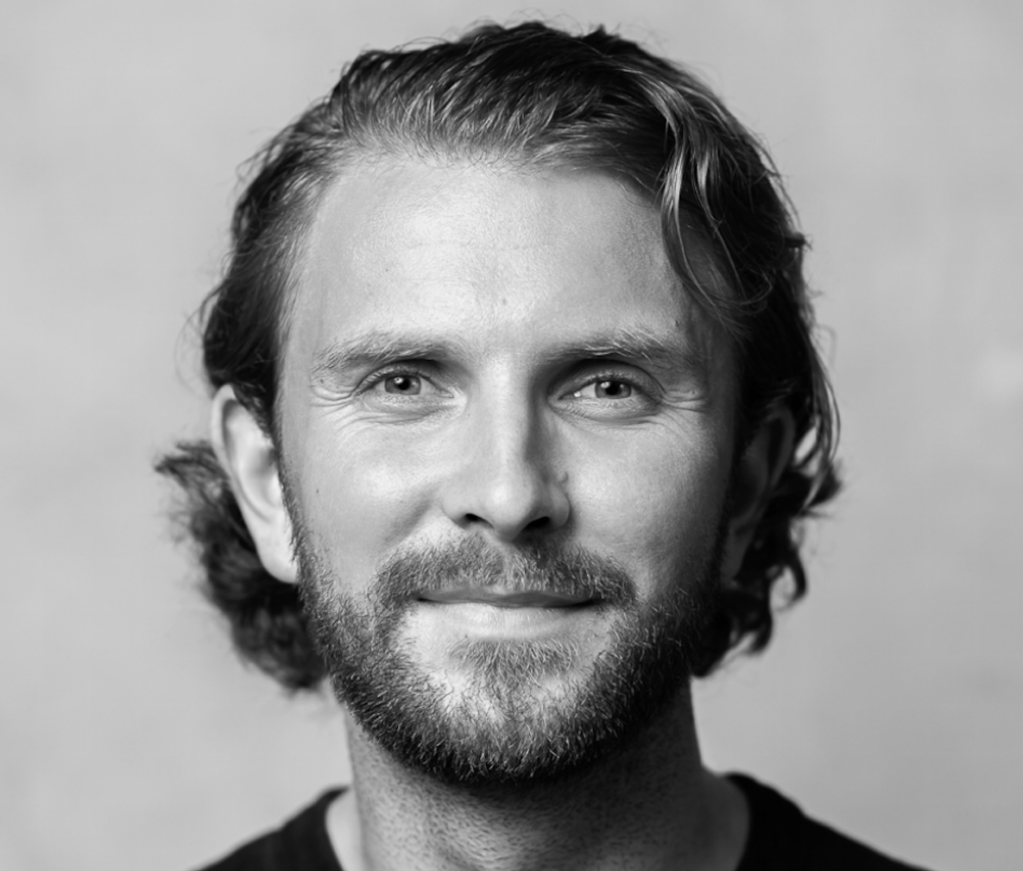
Finn Murphy is a founder and solo VC at Nebular, an early stage fund operated from London and NYC, with global ambitions.
What’s new with Nebular? What are the highlights of this year?
Good year! Starcloud getting set up for first satellite launch in early November.
Myself and Taavet doubled down in Teton in their Series A.
I had made an early bet on healthcare in fund I and all the healthcare companies I backed have raised new rounds with half having raised their Series A’s.
I also did my first incubation – Project 11 – and started off as interim CEO – we got the team together for that in March and raised a $6m seed from some of the best crypto, quantum and bitcoin investors in the world.
+ I got my green card, moved in with my girlfriend & brought on board the first two full time members of the Nebular team!
You have started Nebular as a solo VC after spending almost five years with Frontline Ventures. What’s been the biggest shift – in how you source deals, make decisions, or even think about risk – now that the only investment committee is you. And what have you learned from this experience thus far?
I mean going from a €75m third seed fund with a large team and supportive partners and platform where I largely didn’t have to touch fundraising to a ‘if you do not do it, it will not happen’ was a pretty big step change. Everything from tax, banking, vendor relationships etc…
The steepest learning curve was all around fundraising. I was kind of clueless starting out but it was something I got a lot of great advice from other folks about and gradually got there.
On the investing job, sure you can take more esoteric risk and be more dynamic in negotiation but you’re also pulled in way more directions.
Previously my job was largely ‘find good companies’ now that’s one of 6 or 7 important things I have to do. It’s made prioritisation the sort of number one skillset I need to sharpen.
With the top of the market polarizing – big VCs writing pre-emptive checks and valuations running high – are we in a ‘winner takes all’ environment? How much optionality do boutique funds realistically have to compete for top market deals?
I don’t think they do. It really depends on what you view as ‘top market deals’ I believe there are companies that appear to be ‘obvious’ – i.e. Ex/IPO-ed founder, in Europe we went through an era of funding loads of random VPs from sort of good companies, now it’s like ‘oh you worked at an AI lab? You must be Jesus.’
The platform funds have a relative monopoly on these deals and if you want to do them you need to figure out smart ways of getting there early. It is hard to do this in a repeatable fashion and if you want to get meaningful ownership (so that you can, you know, make real money) – it is basically impossible.
There are however things that are ‘less obvious’ – I would call this kind of closer to what VC was in the older days. You’re taking some esoteric risk on the market, founder, tech or social acceptance of the business. It’s harder to push these deals through an IC when you’re an employee. I can’t be fired and I don’t care about anything other than being great. Middling my risk curve to get a promotion or basically just survive just isn’t interesting for me.
I’d rather do something that people think is retarded at first and then in 10 years make like a billion dollars. Obviously higher risk approach but that’s kind of the whole point.
You’ve spent time between Europe and USA, and invest across both. How do you see the ecosystems differing – in founder ambition, investor behavior, or the speed and structure of deals? Where is the sourcing more competitive?
The founders are just as good on both sides. Obviously there is a higher concentration of quality in the US around places like NYC + SF – also that compounds in shared lessons & immersion in ambition from the culture. It’s like the air is a soup thickened with the hearty spilled blood of capitalism when you walk around NYC or SF. London or Berlin just don’t slap the same.
The problem is honestly the hiring. Most people in Europe want to go to the office, do their work, go home and have a nice life. It’s fine and there’s a bunch of structural issues around it – culture, tax (this is a major fucking issue), and generally attitudes towards employment culture. Like it is possible to do the inverse but you have to be like Nik from Revolut and generally be considered an all time psycho.
Investor behaviour is kinda the same. The job is not that complicated. In Europe it’s funny I think things can actually end up being more competitive because it’s not that big a circle of people and people are more pseudo-competalaborative – if something is interesting expect it to be blasted across WhatsApp in like 13 hours.
What about founders, what patterns are you seeing in how Europeans are going to the market – ambition, speed, risk appetite – compared to US founders? Are European founders becoming bolder, or still too cautious?
A lot of Europeans I meet are targeting the US first. I think that’s fair but also if you’re going to do that then you better be on a plane and infant of an immigration lawyer ASAP. It is not a serious persons business to sell to the US sitting in Europe.
I also see some Europeans doubling down on ‘I’m going to build a local monopoly in my country’ and on that I’m like ‘let’s fucking go’ – do something aggressively in a market with shit competitors and use the AI wave to build a real moat.
I think it’s a bit of a risk tolerance thing. European founders generally are more pragmatic and want to build real sustainable businesses. The issue is that no one cares.
Your sales efficiency pre 100m ARR literally does not matter in VC land. Are you growing? The fact that ‘you did a lot with a little’ of your pre-seed? Literally negative signal. People need to realise that it’s a new era of business building with looser capital markets and if you don’t play the game on the field you’re going to get wrekt.
There’s a visible trend among European founders today: raise early angel or pre-seed checks locally, build an MVP, show traction, and once there’s evidence of product-market fit – move operations or fundraising to the US, where capital and valuations scale faster. Is that now the default playbook or still the exception? And do you think that’s still necessary – or can great global companies now be built and scaled entirely from Europe?
Kinda feeding from the above. If your customers (majority 60%>) are in the US – and you’re not in the US – that is a massive problem. Hiring a remote sales team is excruciatingly difficult. Suck it up and move. Don’t spend 6 months picking the city. Move and if you need to move again then do it. Time is ticking.
I think it’s much more impressive for someone to have moved before raising anything as it shows real risk appetite. I wouldn’t have been able to raise my fund I if I hadn’t done that and I think the problem with doing what you described is once you start building a culture that culture is almost impossible to unwind.
You’ve said you like to back ideas that sit “just outside the edge of consensus.” Where do you think that edge is moving right now – what’s newly contrarian that wasn’t six months ago?
I think quantum is coming into the consensus more and more but people haven’t really figured out the 2nd order effective of what useful quantum computers will actually do – materials science + cryptography being the two main drivers.
I think CNNs ability to discern patterns invisible to humans will also bring about a pretty interesting wave of companies in the health, intelligence and maintenance. This will be pretty cool I think!
Also I think it’s going to be obvious that Starship will work in the next 12 months and a lot of people will start chasing space bags pretty aggressively.
+ old people. Demographic transition is going to be incredible gnarly and I’m investing against that trend in health and manufacturing but it’ll only really play out over the next 20 years.
What are some interesting founders or startups up and coming from Europe?
ElevenLabs the canonical example of the time – referenced by a friend working there lovingly as a ‘sweatshop’ – all the best companies are, and hey if you’re getting rich along the way who cares.
Helene at the Exploration Company is crazy impressive. I’d love to see that work and I think it will as a sort of quasi-neuvo Airbus with mega government involvement. We probably need a better launch business too – I wish our eccentric Billionaires had better hobbies – like Dyson, Ineos guy or Xavier Niel – l respected Daniel Ek’s roll of the game but I think he had to go back to focus on the shareholder value to have the dollar to keep doing what he wanted.
Proxima Fusion also very cool – fellas putting the German Gov over the coals to make it happen which I deeply respect + my biggest position (10%+ of the fund) is in Teton – again, I’m long the elderly. Killer team and in my view will be the sleeper biggest business to come out of Europe this decade.
You’ve backed AI teddy bears and space data centers – what’s the next category of ‘strange but potentially enormous’ you’re watching? And how do you decide which sectors or technologies to focus on – is it thesis-driven, founder-driven, or purely opportunistic?
Income inequality is continuing to rise, which is problematic alongside all the demographic transition bits I discussed.
But Bernard Arnault is probably right directionally that the top 10% of earners will continue to account for a larger percentage of spend in the next decade – pending some cataclysmic event/revolution – so I think things like antiquities / wealth transition is probably going to produce some pretty wild stuff. Quantum too ofc.
I talk to people all the time and read a lot – so it’s kind of pattern matching to opinion forming and then going out and seeing if that puts me in front of some interesting folks.
Looking back at the past year, is there a deal you regret passing on or a bet you misjudged, and what did it teach you about investing early?
I should have invested in this company called Juicebox – I loved both the founders, I had thought about the problem of recruiting a lot. I sent the product to some recruiters and they poo-poo’d it and I lost the sauce. One of the recruiters was working for Sequoia at the time who gave me a steer and like 7 months later Sequoia did a round at 10x the price I could have done it at.
Basically, expert input (other than to avoid things that are like actually fraudulent / wrong) is usually bogus at seed. You like the founders and directionally believe in the category or you don’t. It’s not that complicated.
 Sunday CET Newsletters