
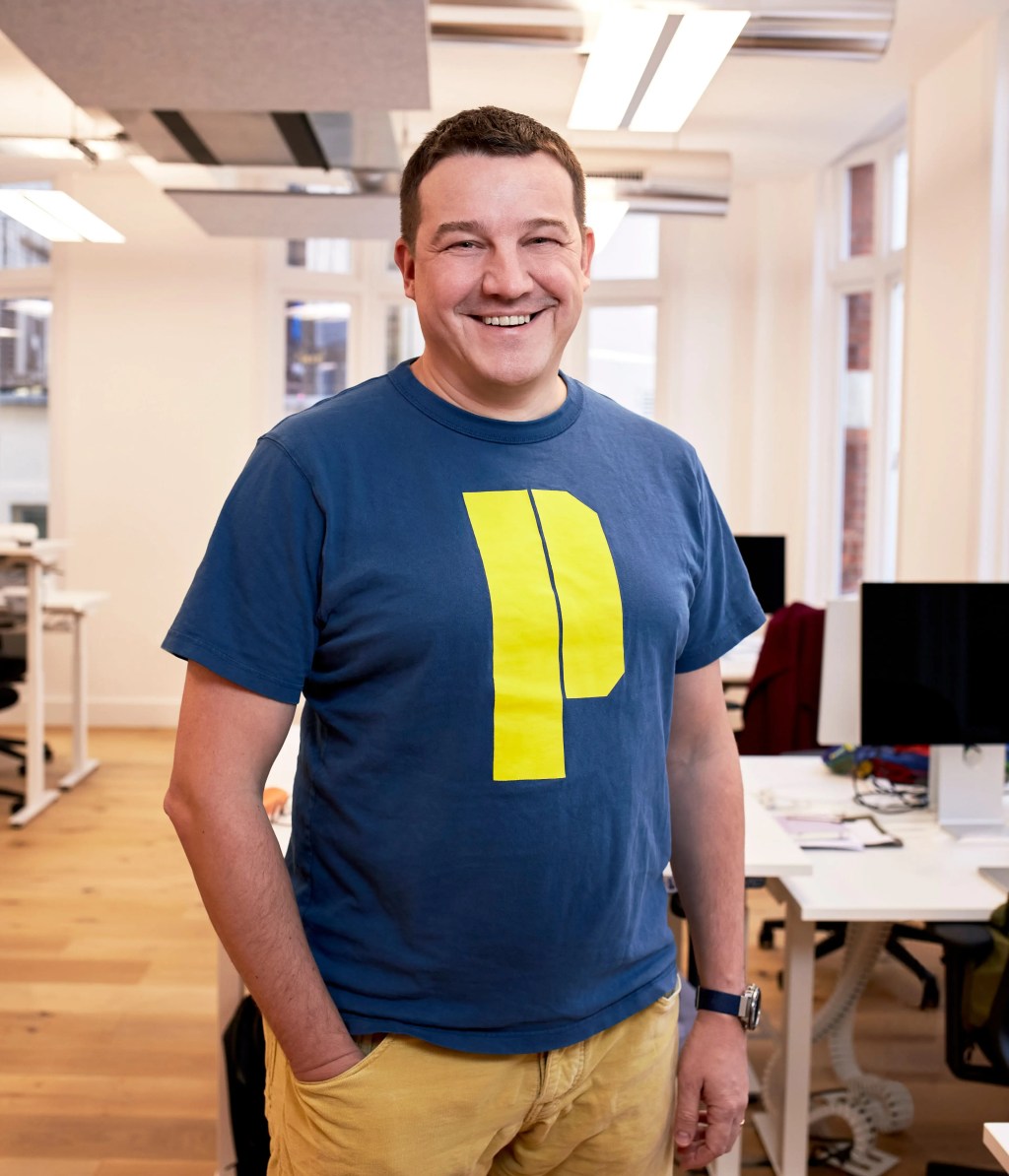
Sten Tamkivi is a co-founder and partner at Plural, an early-stage European VC fund whose aim is to have GDP-level impact on Europe.
What’s new with Plural? What are the highlights of this year?
Our newest equal Partner, Pierre-Dimitri Gore-Coty. The insane scar tissue from his ride (pun intended!) at Uber, growing Eats GMV to €90 billion will be invaluable for our most ambitious founders, scaling the next massive companies to shift the GDP of Europe.
We all can cheer for real progress with some of our earliest big bets, many of which seemed crazy to European venture capital when we made them. Proxima Fusion now published its first power plant concept ahead of plan and raised the largest ever private funding round for fusion in Europe. Monumental was doing unpaid pilots only last year, and by this summer their robots had completed over 34 full homes, where people now live, in the Netherlands. Helsing introduced autonomous fighter jets, underwater defence systems and resilience factories…the list goes on.
And personally I enjoy every day getting to dig deep with some of the most insanely talented founders building seriously hard companies doing everything from asteroid mining (Karman+) to autofocus eyewear (IXI) to the software stack for total defense (Labrys).
Plural is a relatively new venture company – launched in 2022, and now already deploying from a second €500 million fund, closed in 2024. That’s a high velocity for a young startup in this industry. What’s changed – in deal quality, LP appetite, or your own playbook – that made you move that quick?
All together we’ve raised €800 million since 2022 and backed more than 50 teams tackling big missions in 9 countries. We work with the same intensity and level of ambition we’d expect from the founders we support.
When we say we want to shift the GDP of Europe (~€20T), you basically need to create €100B-€200B+ global champions from here. For even having that chance, non-obvious, hard companies matter. The founders of these companies need quite brave capital and investors with company-building experience in order to accelerate.
We are working hard to make the founders-backing-founders side of the product great. And are thrilled that our LPs have recognized this is a product that Europe needs, and something they want to get behind.
500 million is a sizeable amount for an early stage fund in Europe. Do you think size is a rather defensive move – raising more to avoid being out-chequed by US firms on European deals – or an offensive bet that Europe can now seed and scale more capital-intense, world-class systems companies?
Initially we went out to raise €150 million, and following the strong interest ended up with €260 million Fund I. The biggest rookie mistake we fixed in Fund II was to have more reserves, especially for the level of ambition we found from our companies.
So that, plus having Carina Namih join as equal Partner in for Fund II, was what led us to a bottom-up design of €500 million. This is purely offensive thinking, we have our vision for Europe, we are super bullish about the early stage pipeline in Europe, and always want to be right sized for that.
Given Taavet’s and your background, Estonia and the Baltics have been a persistent source of founders for you. What do those ecosystems produce differently than other European hubs – and what should founders outside the Baltics be stealing from their playbook?
Firstly, a side comment:
- it always feels the outside world sees “the Baltics” as one ecosystem much more than it feels so inside. A few years ago we realized that not even all the unicorn founders from Tallinn, Riga and Vilnius have met each other. For a few summers we’ve been organizing gatherings to fix that and build stronger ties. But the ecosystems in these 3 countries feel quite different; in practice I would maybe even link Tallinn and Helsinki closer together today.
But to bring out something from all our small nations: a scrappy approach with a global lens. Anything you start here you always wonder, “how do I get this done?” with 3 people, without the luxury of tons of headcount and infrastructure.
And at the same time, our home markets are so tiny, you only think of the global market if your intention is to build a massive company. So the result is max high output with min inputs – a ratio that any startup strives for – and comes super naturally for us.
- Also, for this age, the fact that we still remember what the Soviet occupation was like means that the Eastern Flank of NATO takes all tech development around defense and sovereignty at a completely different level of seriousness and urgency. Never again! This is why we count 110 new defense tech startups that have popped up in Estonia since Russia started a full scale war against Ukraine…
On a broader level, where are you seeing the most underrated technical talent pools in Europe today (hard sciences, ML research, photonics, materials) that tend to be overlooked?
I think some of the things in brackets are still very much underrated, like AI-designed physical materials and photonics for next-gen compute.
A few others we have gotten excited about with uniquely European teams recently: long-range clean lithium-sulphur batteries, quantum algorithms, breakthrough fusion with stellarators, optics, long tail industrial automation – how do you automate the Mittelstand, and other high mix low volume industries? – and transformational neuro-technology.
What are some interesting founders or startups you have come across lately – and why were they interesting?
We have this rule at Plural: we don’t announce the investments, our founders do. This means we have backed some teams who choose to build heads down for years before they show up on our website… 🙂
Outside of those we’ve already invested in, I think the list of areas above applies.
Name one company in your portfolio that visibly surprised you (positively) after you invested – what did you misread at first, and what did they do to disprove your initial assumptions?
Karman+, the asteroid mining company. Teun is a repeat founder and had bootstrapped the company already to a point that when I started working with him, it felt the tech roadmap was already getting de-risked and there were sensible answers to questions about how they build their spacecraft and run their missions.
- What was much more unknown even a year ago was if there is a real commercial market for their product, bringing water back to Earth’s orbit to be used as propellant and sustaining life.
- Today they are on track with the engineering plans for Mission 1, but have completely blown through any of our dreams about off-take agreements, pre-orders, pipeline and other proof of commercial traction that we could have expected for this phase of the company.
- Space economy is becoming real, both for commercial and defense motivations.
What actually kills most European seed-stage startups – is it flawed product-market fit, weak distribution, undercapitalisation, or simply founder exhaustion? To what extent are those causes structural – shaped by Europe’s low tolerance for failure and its fragmentation across markets, languages, and regulation?
I don’t see proportionally more European companies die at seed stage than in other markets. The early stage cycle is pretty well-funded and well-understood, with probably 50+ local ecosystems on the continent.
- The problem comes when it’s time to scale, across Europe and across the world. That’s where audacious capital to match tends to suddenly dry up.
- So paradoxically, the bigger structural problem might be seed stage startups not dying, but remaining… SMEs?
Which three categories should European founders stop pretending they can win globally from day one, and instead focus on local dominance first? Why those categories? Conversely, which category can Europe realistically own versus the US, and what structural advantage (talent, regulation, customers) backs that claim?
For the rest of this decade, at least, Europe is fragile in sovereign energy production, which is the foundation of everything. And more specifically on top of that: our compute, defence and space capabilities.
They’re all connected, and there’s an immediate need for European founders to build globally-competitive, locally-dominant companies in these areas.
It feels redundant to tell you “AI will change everything” and do some handwringing about “Europe losing that race”… But maybe two specific thoughts there:
- Seems that there is something very compelling about Europeans solving specific lack of labour issues with AI – something where we have natural urgency because of our demographics and societal priorities and inherent capabilities when it comes to our deep AI talent. We see powerful European teams solving the lack of human hands with physical AI (Monumental → bricklayers, Sunrise → factory workers, Starship → couriers, Teton → medical nurses, etc) but also with pure software layers (Metaview → recruitment, Sano → medical trials).
- In recent conversations with some American friends there seems to be a new angle for excitement for what is happening in venture in Europe: doing things that are not 100% correlated with NVDA stock, solely dependent on access to tokens from few key model labs and denominated in USD… have you ever thought of European venture as a geopolitical-macro-hedge?
What’s one question I should have asked but didn’t?
What are the insane industry norms that need to be eliminated or completely rethought (e.g. founders having to pay for their investors’ legal fees; investors getting paid astronomical management fees just to grow AUM; the transactional language this industry speaks about deals, markups, etc)?
And of course, a question I hope all European investors would ask themselves at least weekly: when was the last time you encouraged your founders to go bigger, bolder, faster, more aggressive than they proposed?
 Sunday CET Newsletters