
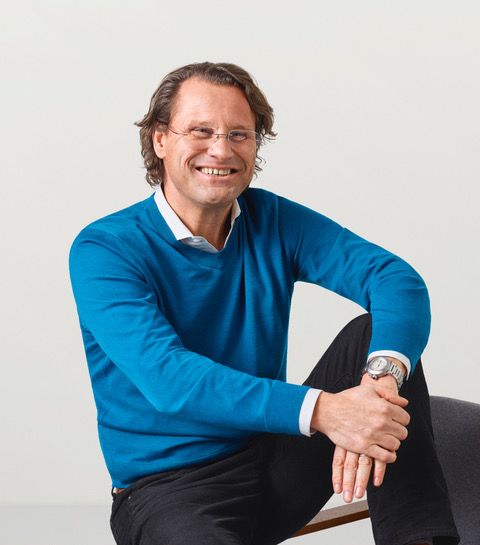
PJ Pärson is a GP at Northzone, British multi-stage VC with Norwegian origins and partnering with founders from seed to growth, across Europe and the US.
What’s new with Northzone? What are the highlights of this year?
8 out of 10 new investments at Northzone have been AI related.
Unprecedented growth in revenues in underlying portfolio companies in a radically less cash hungry way than in the past.
Sweden seems to be riding another tech super-cycle – Spotify in the 2000s, iZettle/Klarna in the 2010s and now promising startups like Neko, Lovable or Legora. What structural advantages keep Sweden ahead – and what drawbacks still hold founders back today?
Stockholm specifically has a high enough talent density and I think there are some 200 companies that have been spawned from Spotify/Klarna/King/iZettle over the past few years.
These people know what great looks like.
We’ve seen a mini industrial-tech wave, with mixed results – Northvolt gone, Stegra struggling, while the likes of Aira, Polarium, and Syre are still finding their footing. What do you make of this wave?
I think capital intensive businesses with long lead-time to scaling will have a tough time – especially with the headwinds for sustainability related investments which makes access to capital more challenging.
Europe is living through overlapping shocks – war, energy realignment, a sovereignty push and the AI supercycle. Which industries do you think will implode under these pressures, and which ones will explode in the next few years?
Hard to see what will implode although I’m worried that the sustainability driven investments will experience the same tough times as the clean tech wave from the 2005-2010 did when the financial crisis pulled the rug from under them and eliminated a large part of that emerging industry.
I think the next wave of AI companies will explode in demand – those are companies addressing large legacy industries with new AI-driven IT stacks and dramatically lower operating costs and better tailored products.
Defense tech in Europe is suddenly cool. What kinds of companies will dominate over the next 5-10 years – and what do you make of the new mini-defense holdings, like Daniel Ek’s collaboration with Wallenberg, as a model? Could that hybrid model become an European pattern?
It’s not a new phenomenon as defense tech in the past often has been coalitions of investors, incumbents and government to lower risk and maximize access to market, capital and talent.
Europe still struggles with liquidity – exits, secondary markets, and scale-up capital. Is there a realistic way out, or does ‘build here, cash out in the US’ remain the rule? How do you see this shaping the next five years?
I think a much bigger problem is the absence of the large pools of capital like German pension funds in the tech and growth markets that could materially change the game if they stepped up to the plate.
The trading venue at NYSE or Nasdaq for IPO’s are global market places and accessible to everyone, also EU investors these days.
OpenAI says it’s on track to 1T in revenue in the next five years – do you buy that? What would it take for Europe to produce a company of that scale in the next decade?
The infrastructure layer of AI including OpenAI will most likely commoditize and consist of 3-4 hyperscalers with their own respective complete walled gardens where they want their customers to fully standardize on their tools and services.
There doesn’t seem to be any candidates yet for a EU hyperscaler though.
What are some interesting startups or founders you have seen in Europe lately?
Tons of them. Europe has really progressed from where entrepreneurship was low priority & low desirability and over the past 5-10 year it has become the polar opposite with also the political system waking up to this.
If you were building an AI company in Europe today, what blind spots would you watch for that most founders ignore?
I don’t think entrepreneurs ignore the battle for talent but many underestimate how crucial it is to win that battle to be truly successful. True talent is expensive and requires focus to attract.
How has your approach changed in the last five years, and if you had to start your career over today, in this climate – would you still become a VC?
Absolutely. This is the best time ever being a VC. We have become more comfortable investing even earlier as product market fit manifests itself earlier now.
 Sunday CET Newsletters