
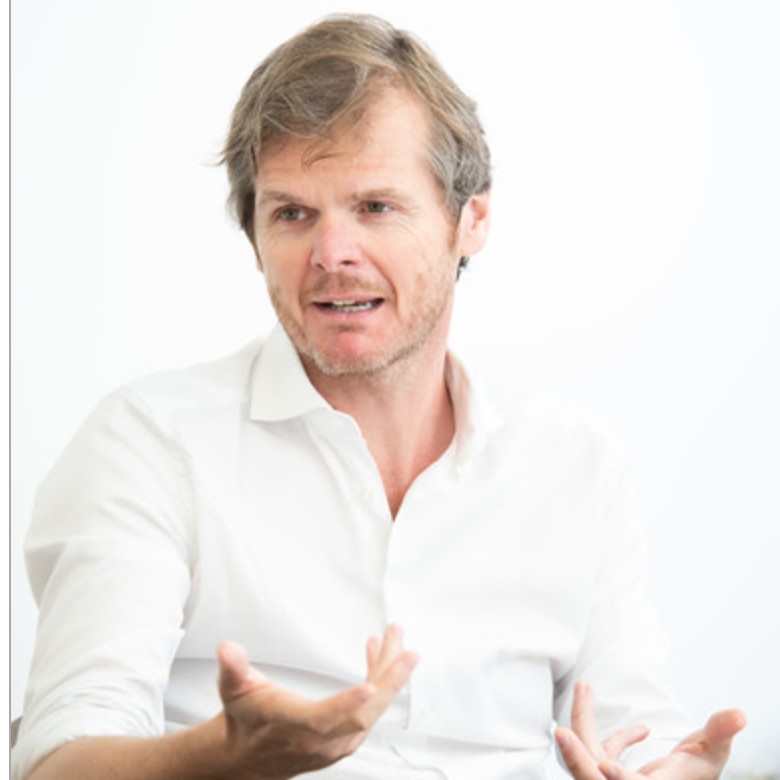
Kris is a founding and managing partner at Firgun Ventures, a VC fund based in London targeting funding deals with Series A / B Quantum scale-ups.
Why does Firgun exist and what do you offer that founders cannot already find from generalist growth funds or corporate strategics?
We want to plug the funding gap for early-growth stage Quantum scaleups.
We focus exclusively on Quantum.
We are also building a unique, quantum industry knowledge graph tracking thousands of companies, founders, patents, talent flows, and funding events.
Why focus on Series A/B specifically? What makes this stage the optimal inflection point for quantum startups today, and why not seed or later-stage?
Founders experience a funding crunch at this particular early-growth stage of their journey. The Series A-B valley is often the make-or-break stage for many of them to succeed in the market.
Why is now the right moment for a specialist growth-stage quantum fund? How does the maturity curve of the quantum ecosystem map onto Firgun’s own growth trajectory? And is your approach dogmatic or opportunistic as the ecosystem evolves?
Founders are looking for “informed” capital, as in investors who can credibly lead a round.
We believe we have the skills across the team and our advisors to do this, and Firgun will grow and evolve with the space as it evolves over the next 10 years.
We aim to be opportunistic and adaptable to the evolution the ecosystem itself undoubtedly will undergo.
Which areas of the quantum ecosystem remain structurally underfunded or underserved, and how is Firgun specifically positioning itself to fill these gaps?
The newer hardware modalities are somewhat underfunded or underserved, and so is sensing and comms.
How do you segment the market and think about portfolio construction in a field where technology roadmaps and capex differ radically between hardware, middleware, algorithms, applications, and hybrid approaches? Which verticals do you expect to commercialize first, and what evidence guides your view?
We aim to invest across Quantum Technologies (Computing, Sensing, Communications/Cryptography) and build a portfolio of 15-20 companies.
We expect quantum to commercialise first in life and material sciences, finance, and telco.
Who are the best-in-class quantum investors globally and in Europe? What are the biggest misconceptions about the quantum market among investors right now?
Best in class are the thematic quantum investors in our view. The single-biggest misconception about the quantum market among investors right now is that the Quantum revolution is more than 10 years out.
Beyond the QIA anchor, how is your LP base structured, and do any LP mandates or geopolitical considerations influence your deployment or exit strategy? In a sovereignty-sensitive sector like quantum, how do you manage potential conflicts or national-interest constraints between China, US, EU, Gulf states?
Our LP base consists of our anchor investor and a number of family offices, including Ilyas Khan’s, founder of Cambridge Quantum Computing/Quantinuum (a company we have been private investors in since 2016).
Our investment mandate is OECD, plus India and Singapore.
You emphasize ‘First, do no harm’ and ‘patient capital’ – what does that translate to in term-sheet terms, governance, or board behavior? Operationally, how do you help founders bridge the gap from lab-proven technology to real-world deployment, especially given long quantum sales cycles and variable customer readiness?
“First, do no harm” translates into a constant self-check of not doing harm as an investor, and being a caring and informed supporter, instead of an actual operator.
Of course, we aim to add value but we will have the self-awareness to know when we shouldn’t or couldn’t.
As to real-world deployment, we will actively help our portfolio companies secure industry partnerships through our own networks.
What are some interesting quantum startups you came across in Europe lately?
We like Universal Quantum in the UK, Commutator Studios in Germany.
What is your most contrarian belief about the future of quantum – something you think is true but the broader industry does not yet accept?
Unless specific steps are taken to mitigate that outcome, Quantum is an industrial revolution and will create a multi-speed world with nations that are haves and have-nots, and all the consequences one can imagine that to have.
We are doing regularly interviews for taking the pulse of the startup market through the eyes of the investors – you can subscribe to have them sent by email as soon as we published new ones.
 Sunday CET Newsletters