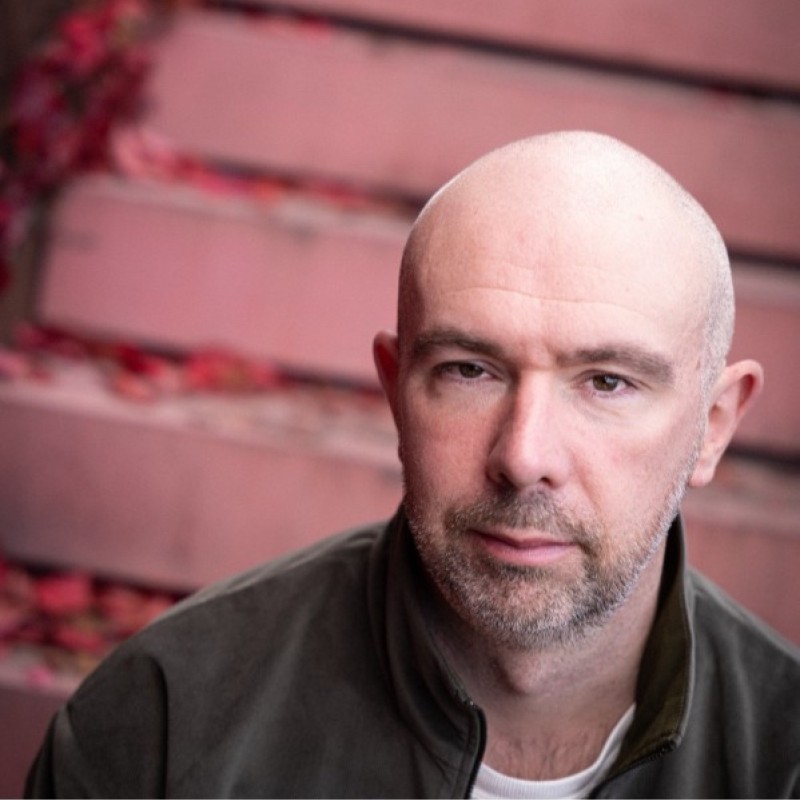
Neil S W Murray is a founder and a solo GP at The Nordic Web Ventures, an up and coming early stage investor out of Denmark.
What is Nordic Web Ventures – what’s your investment thesis and what does your sweet spot look like?
The Nordic Web Ventures is a first-cheque Nordic fund for possible futures.
I back founders when the market doesn’t believe them yet, when they’re building into “zero-billion-dollar markets” today that could become billion dollar+ markets tomorrow if their view of the future is right.
The core of my thesis is that the biggest outcomes don’t come from sizing today’s markets, but from backing exceptional founders whose insight and conviction allow them to create the market. Ultimately I am assessing whether this is the team that will win if their vision of the future comes to be.
The best Nordic companies I’ve backed have followed this exact pattern, founders whose internal model of the future eventually became everyone else’s model:
Sanity and the future of structured content, SafetyWing and global social infrastructure, and Lovable and AI-native product creation.
My sweet spot is writing the first cheque into founders like these, before consensus forms and while assessing founders and “what if this goes right?” still matters more than proof.
The Nordic market is as investor-crowded as it’s ever been – at one end VC hyper-scalers going at it both D2C and via reps, and on the other, multiple local funds and angels chasing deals. Where does The Nordic Web fit and how does it take business from them?
I believe it is crowded in quantity but not quality. The reality of first-money in the Nordics is that a majority of the local pre-seed specific funds simply don’t understand how to invest that early.
Founders relay horror stories to me every week of tranche funding around product goals, 3 years of LTV/CAC projections, 15 people on investment committees and even competency questionnaires!
Funds like these are often leading $1.5M pre-seed rounds, but from what I see the best founders often don’t fit neatly into this definition of what a pre-seed round should look like.
Some raise <$1M syndicates: fast, scrappy, “headless” (h/t Sarah Drinkwater) rounds that bring multiple great people (angels, micro funds, Solo GPs etc) around the table, providing early validation before a breakout seed.
Others raise $3M+ internationally led rounds, skipping the incremental step and going global from day zero.
Pre-seed, as it’s usually practiced, is about the middle. I invest in those extremes.
You say you want to build ‘one of the best-performing early-stage funds in Europe’ – what does that specifically mean and how do you plan to get there? If you benchmark yourself today, where do you realistically stand?
For me, performance (when it comes to LPs) comes down to one thing: DPI, and the ability to generate 10x-plus multiples, across multiple funds, not just once, and not just on paper. Anyone can have a good mark in a bull market. What matters is returning real capital and proving that the outcome wasn’t accidental.
That’s why discipline matters more to me than demand and I capped my latest fund at $6M despite it being significantly oversubscribed. I have no interest in accumulating AUM for its own sake, because larger funds almost inevitably dilute both decision-making and outcomes.
Where I stand today is very much at the start of that journey. Fund I is tracking at a 10x multiple, Fund II has some way to go, and Fund III has started well out of the blocks with Lovable.
The ambition is to build a repeatable system that produces multiple 10x outcomes and real DPI across funds, not to be complacent and accumulate AUM from backing a few great companies.
Why would a founder take money from you? Beyond money, what specifically do you put on the table, other than the standard Whatsapp availability?
A founder should take my money if they want someone who is comfortable making decisions before there’s proof, and who has seen enough early-stage companies to recognise when something feels directionally right.
I’m useful very early: shaping the story, stress-testing assumptions, helping founders avoid obvious early mistakes, and thinking through how the company should look before it starts scaling. I’m not trying to run the company, but I will be direct when something doesn’t make sense.
Over 50% of founders I’ve backed in my first two funds invested back into my latest fund.
That’s probably the most honest signal of value.
What’s your mental model of a startup trajectory i.e. before taking the money from you and post, say 18-24 months?
Before investment, it’s purely whether I feel the founders have enough clarity and speed to turn ambiguity into momentum.
Eighteen to twenty-four months later, I’m looking for one of three things: clear acceleration, clear product-market direction, or clear evidence that the team can learn and adapt faster than competitors. If none of those are true, it usually doesn’t work.
What are specific verticals and/or business models you would like to see more dealflow from – and how does that compare to what you see the market produces these days?
I’m increasingly attracted to founders who are building the thing they want to exist, rather than starting with a “plug-in, land-and-expand” strategy designed to look good on a pitch deck.
A lot of early-stage companies today are optimised around distribution tactics before the core product really matters. That can work in benign markets, but it tends to break down quickly in hype cycles or downturns, when attention shifts and budgets tighten.
The founders I’m most interested in start from a clear, opinionated vision of what they want to build. They’re usually building something that feels slightly too ambitious early on, but that depth is exactly what gives them durability.
If we are in, or heading into, another hype cycle, I think the companies that survive will be the ones built for the right reasons: not to wedge themselves into an existing stack, but to create something meaningful enough that it earns its place outright.
What are some interesting startups you’ve seen lately?
Robotics is having a real moment in the Nordics right now. You’re seeing founders who combine strong software backgrounds with hardware, automation, and AI in a very pragmatic way. A couple of companies I’ve recently backed here are MAKIINA and Qualia.
I’m also particularly interested in vertical AI companies targeting physical products/industries.
Data in the physical world has not been fully solved by software yet due to how messy, complicated and unstructured it can be, but with AI that is now possible. I just invested in
Complir, started by Gustav Bang who was previously Head of Denmark at Legora and is now building a “Vanta for physical products”.
What excites you most about the current early‐stage ecosystem, and where is the alpha in an European market in recession with most founders building US-first?
The number of repeat founders we are seeing right now in the Nordics, who are not just on their second companies, but in some cases their third or fourth.
The alpha continues to get earlier and earlier. By the time founders update their LinkedIn to “Stealth” it’s already too late. At this point, early-stage investing is starting to feel a bit like Minority Report.
The real edge is being close to founders before the idea has fully formed, by being deeply embedded in the ecosystem, regardless of whether they build from here or there.
You were one of the early backers in Lovable – can you share how you ended up as an investor with them? And on a broader perspective – what do you consider to be a ‘lucky break’ versus the ‘earned break’ in your career?
I have my friend Dan McCormick from Greens Ventures to thank for that. He made an introduction to Anton and we largely connected and bonded over our experiences in Y Combinator (I was in YCW21 with my company and Anton was in YCS20 with Depict) and our company building ideals.
I have thought a lot about whether I was “just lucky” to invest in Lovable and have become comfortable with the following:
- One of the benefits of fishing in a small pond is that it is easier to judge the quality of founders within specific verticals. For example, with Anton and Fabian, I was 100% certain that I wouldn’t find a better team than them building in this space in the Nordics. In that respect it was a no brainer decision.
- Was I lucky to find them, speak to them, get to invest? Possibly. But if anyone wants to call 8 years of building relationships, paying it forward and no management fees “being lucky” then I am happy for them to do so.
Who are your heroes in this investment business and what are some good investment practices that you see in the US and would like to see more of over here?
I don’t have any heroes in VC but I do have an incredible amount of respect and gratitude for some of Europe’s best investors who have supported me and believed in my potential as an investor from before I even wrote my first cheque and who I have been lucky to (and continue to do so) learn from: Philipp Moehring, Christoph Janz, Thomas Madsen-Mygdal and Christian Jantzen.
I have raised from investors from both sides of the Atlantic with my own company and what always stood out to me, especially at first money, was 1) the speed of decision, 2) the lack of ego and not needing to over intellectualise everything, and 3) to use the lens of “what could this be if everything went right?” rather than “what are all the ways this could go wrong?”.
I try to implement these more “US style” behaviours in my own investing and see no reason why these shouldn’t be European ideals as well.
We are doing regularly interviews for taking the pulse of the startup market through the eyes of the investors – you can subscribe to have them sent by email as soon as we published new ones.
 Sunday CET Newsletters